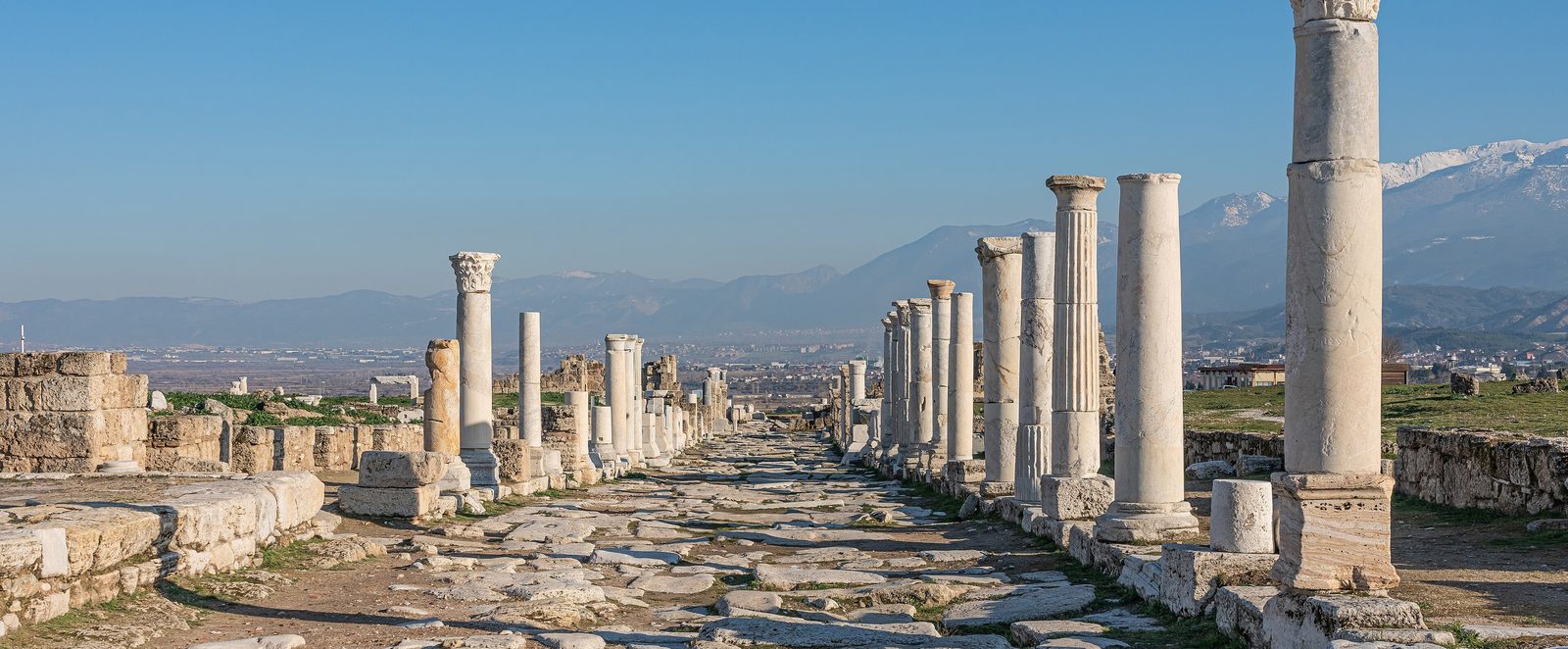
When people think of the seven churches, they think of John — the visions, the letters, Patmos. And rightly so. But John arrived to shepherd communities that, for the most part, were already there. The man who did much of the planting, the one whose restless walking first carried the message across this land, was Paul. You cannot really understand the seven churches without him, and yet he is strangely easy to overlook on a Revelation tour. Let us give him his due.

A Son of This Land
Here is the detail most visitors do not know: Paul was not an outsider who came to Asia Minor. He was from it. He was born in Tarsus, a prosperous city in Cilicia, in the south of modern Turkey — "a citizen of no mean city," as he says himself with a touch of pride. He grew up bilingual and bicultural, a Jew of the strict Pharisee tradition and at the same time a Roman citizen at home in the Greek world. That double inheritance is the key to everything he later did. He could walk into a synagogue or a philosopher's hall and belong in both.
His conversion on the road to Damascus turned a persecutor of the church into its most tireless missionary. The words spoken over him at the time set the whole trajectory: he was to be a chosen vessel to carry the name to the nations. And the roads of his own homeland, Asia Minor, became the first place he carried it.
Walking Anatolia
Paul's missionary journeys read, on a map, like a man who could not sit still. On his first journey he crossed into the highlands of central Asia Minor — Antioch in Pisidia, Iconium, Lystra, Derbe — preaching, gathering small communities, and being driven out of one town after another. At Lystra he was stoned and left for dead, got up, and kept going. He was, by any measure, a difficult man to discourage.

But it is his time on the Aegean coast that matters most for the seven churches. On his third journey Paul came to Ephesus and stayed — not for weeks, but for nearly three years, the longest he settled anywhere. He taught daily in the hall of a man named Tyrannus, and the book of Acts says the whole province heard the word as a result. This is the hinge. From that long Ephesian base, the message radiated up and down the roads of the province — to the very cities that would, a generation later, receive John's letters.

The Riot, and the Cost
Paul's years at Ephesus were not quiet. His preaching cut into the trade of the silversmiths who made shrines for the great goddess Artemis, and the city erupted. A mob filled the twenty-five-thousand-seat theater and roared "Great is Artemis of the Ephesians!" for two solid hours. You can still sit on the stone of that theater today; our guides take groups there constantly, and reading the account of the riot where it happened never loses its force.
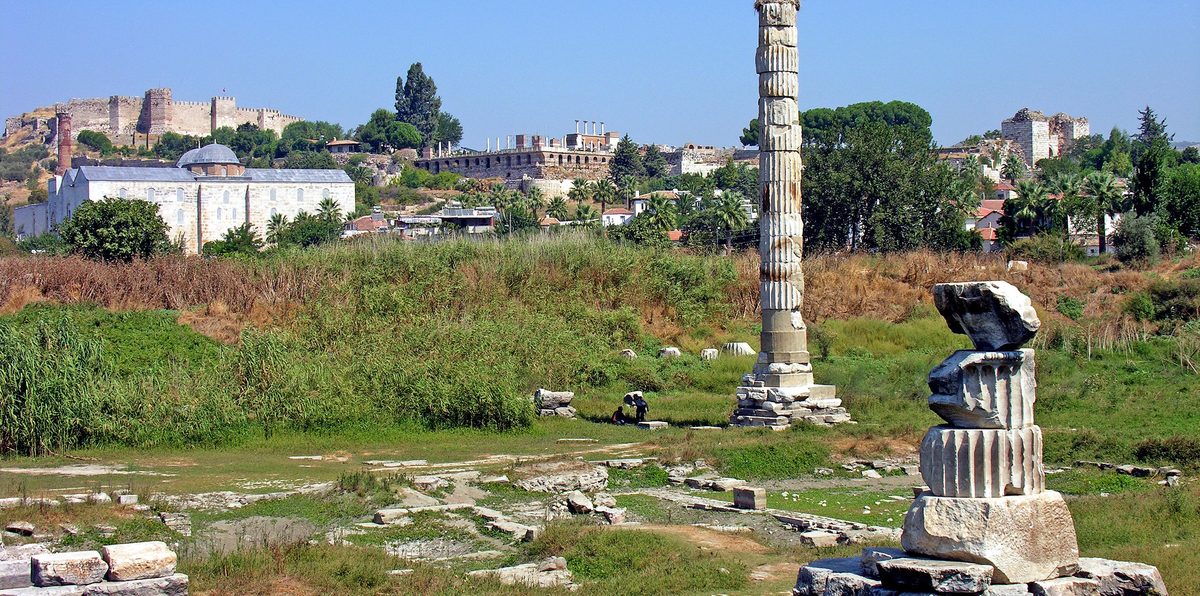
That uproar is a window onto the whole cost of Paul's work. Everywhere he planted, he disturbed something — a trade, a temple, a settled way of life. He left a trail of new communities and bruised authorities behind him in almost equal measure.
Paul and the Seven Churches
So how exactly does Paul connect to the seven churches of Revelation? Directly, in the case of Ephesus — he founded and shaped that community himself, and wrote it one of his greatest letters. The others he did not each found in person, but they grew within the network his Ephesian ministry set in motion, in the same province, along the same roads, often through his own coworkers. He names some of them: Epaphras, who carried the gospel up the Lycus valley toward Laodicea; Priscilla and Aquila, who taught at Ephesus. The seven churches are, in a real sense, the second generation of the work Paul began.
He himself moved on. His final journey took him as a prisoner to Rome, where, by the strong tradition, he was executed under Nero. He never saw the letters of Revelation; he was gone a generation before John wrote them. But the cities those letters address were, many of them, lit from the fire he had set.
Tarsus, Ephesus, and the Road Between
We find it moving that the whole arc bends back to this land. Paul was born in Asia Minor and did his most enduring work in Asia Minor, and the churches he helped plant here became the seven that close the Bible. To stand in the ruins of Ephesus is to stand in the one place where Paul's story and John's story and the seven churches all physically overlap — the harbor city that held them all.
You can read what became of that city in our piece on the church of Ephesus, and the wider setting in the land of the seven churches and the timeline of Christianity in Turkey. And if you would like to walk Paul's Ephesus with guides who live beside it, our Footsteps of Paul tour was built for exactly that — you are welcome to contact us.
Gallery



Sources & Further Reading
- Acts 19 (KJV) — Paul’s three years at Ephesus and the riot
- Saint Paul the Apostle — Encyclopaedia Britannica — a scholarly life of the apostle
- Paul the Apostle — Wikipedia — his life, journeys and letters
- Tarsus, Mersin — Wikipedia — the apostle’s birthplace in southern Turkey